
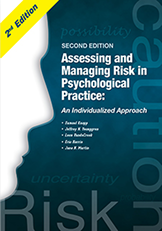
- Workshop Description: Psychological practice today unfolds within an increasingly complex and interconnected landscape—one that places unprecedented demands on both new and experienced clinicians. Expanding scopes of practice, rapidly evolving technologies, interjurisdictional care, and continued ethical and regulatory scrutiny have fundamentally reshaped what it means to practice responsibly. The challenge goes beyond understanding ethical principles to applying them skillfully, compassionately, and coherently across overlapping roles, systems, and expectations where decisions in one area often ripple outward into others. This workshop offers an integrated, systems-informed framework for navigating complexity with clarity and confidence, supporting thoughtful, care-driven decision-making that protects clients, preserves trust, and sustains clinicians over time.
- Three interconnected dimensions of contemporary practice will be explored. Participants will examine the relational foundations of ethical work, including informed consent as an ongoing process and the management of multiple relationships and boundary complexities that arise when professional roles and contexts intersect. The focus then turns to the digital and interjurisdictional landscape, addressing ethical responsibilities related to artificial intelligence (AI), digital privacy, and practicing across regions and regulatory contexts— where actions in one setting can have implications far beyond it. The workshop concludes with the legal and regulatory dimensions of modern practice, including documentation, multi-state practice considerations, and responding skillfully to licensing board complaints as professional reach and responsibility expand.
- Throughout, the emphasis is on helping clinicians make integrated, ethical, and defensible decisions in a complex environment without becoming reactive, overly cautious, or disconnected from care. Participants will leave with practical strategies, renewed clarity, and a steadier sense of how to strengthen their professional structures and practice ethically, responsibly, and sustainably within today’s evolving landscape.
- Learning Objectives:
- Describe at least four methods to improve ethical and risk management decision-making
- Identify three elements of a fully informed consent process
- Delineate at least three steps in determining whether a boundary crossing is more likely to be a harmful violation
- Define four aspects of AI that should be evaluated before its adoption for professional practice
- List at least three ethical and risk management aspects of interjurisdictional practice
- Describe three central themes in documentation
- Identify three methods of addressing licensing board complaints
- TBD
- 6 Ethics Continuing Education Credits
- 15% of your Trust Sponsored Professional Liability Policy premium (for 2 consecutive years at policy renewal).
- www.trustinsurance.com
- * This course will not fulfill the requirements of all jurisdictions. It is essential that potential participants review their respective state licensing board requirements before registering for this workshop.
- Target Audience: The Trust’s workshops and webinars are appropriate primarily for psychologists and psychology students, but may also be useful to other related behavioral health practitioners. The Workshop is designed for an intermediate level.
Exclusive Savings for Psychologists: Take 15% off your Professional Liability premium for two consecutive years when you complete 6 CEs with us. View CE Options.