

On September 9, 2026, Dr. Bruce Eldon Bennett, former Chief Executive Officer (CEO) of The Trust, passed away peacefully at the age of 84, after living with Parkinson’s disease for 17 years.
Those of us who carry the work of this organization forward are reflecting on what he built and on what his legacy asks of us now.
Bruce led this organization as President and CEO of the APA Insurance Trust, the organization that is today The Trust. He was a clinician first, then a state association leader, an educator, an author, and an advocate. As the head of the leading provider of professional liability coverage for psychologists, Bruce understood the profession from the inside, which has always shaped the way The Trust has supported our insureds and their professional practice.
A career at the intersection of psychology, ethics, and law
Bruce began in private practice and rose to lead the Illinois Psychological Association as both President and Executive Director. He was recognized as a Distinguished Psychologist for his advocacy on behalf of psychologists and their patients. One of his proudest achievements was helping to expand insurance coverage for psychological services in Illinois, work he later carried to Washington, D.C., in collaboration with U.S. Senator Daniel Inouye.
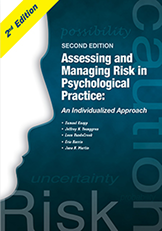
At The Trust, Bruce’s focus was professional ethics, risk management, liability, and the legal responsibilities of psychologists. He spoke at state psychological association conventions across the country, contributed to the revision of the profession’s ethical standards, and wrote and co-wrote works on psychology, ethics, law, and professional risk. He also taught at Northwestern University, Rosary College, the Chicago Medical School, and the Evanston School of Nursing. In every setting, he treated risk as something to be understood and managed through education, not merely a liability requiring insurance.
The responsibility we inherit
The Trust was initially founded to protect the profession of psychology. Bruce understood that mission to be much larger than an insurance policy. Thanks to Bruce, the mission also includes the free risk management expertise that The Trust offers our policyholders to help them practice with confidence. It also includes our philanthropy, which we direct deliberately toward sustaining state psychological associations, related associations, and profession-specific causes.
A profession is only as resilient as the institutions that hold it together, and those institutions need steady support. Carrying this mission forward means holding the same principles Bruce did and recognizing that protection, education, and advocacy are deeply interconnected.
The person behind the profession
Many of our current staff, consultants, and Board members had the privilege of working with Bruce. In my two and a half years as The Trust’s CEO, I feel I have come to know Bruce through his reputation, the stories my colleagues and staff tell of him, and the mark he left on so much of the work we continue to do today.
Colleagues remember him not only for his expertise, but for his generosity, sense of humor, and genuine interest in others. Those who knew Bruce remember him as much for how he made people feel as for what he accomplished. He was a great listener and a loyal friend with a gift for making people feel known and valued, and he loved to make them laugh. After retirement, he became a certified Parkinson’s trainer and continued serving others in that community, which speaks to his commitment to integrating his personal experience with his professional endeavors.
Honoring a legacy
Bruce’s impact on both the profession of psychology and the organization that is The Trust today was extraordinary. During his tenure as CEO, he helped shape the organization’s commitment to professional ethics, risk management, advocacy, and service to psychologists across the country. His leadership strengthened the Trust’s reputation and advanced its mission in ways that continue to benefit the profession.
Bruce’s legacy is not only in the history of this organization but also in the work we do every day on behalf of the profession. I am grateful for his vision, his generosity, and the foundation he left us. It is our privilege to build on his legacy.